
Flinders Ranges: Ancient earth and fascinating wildlife
 by TeresaGlobalTravels Teresa Lynch5 min read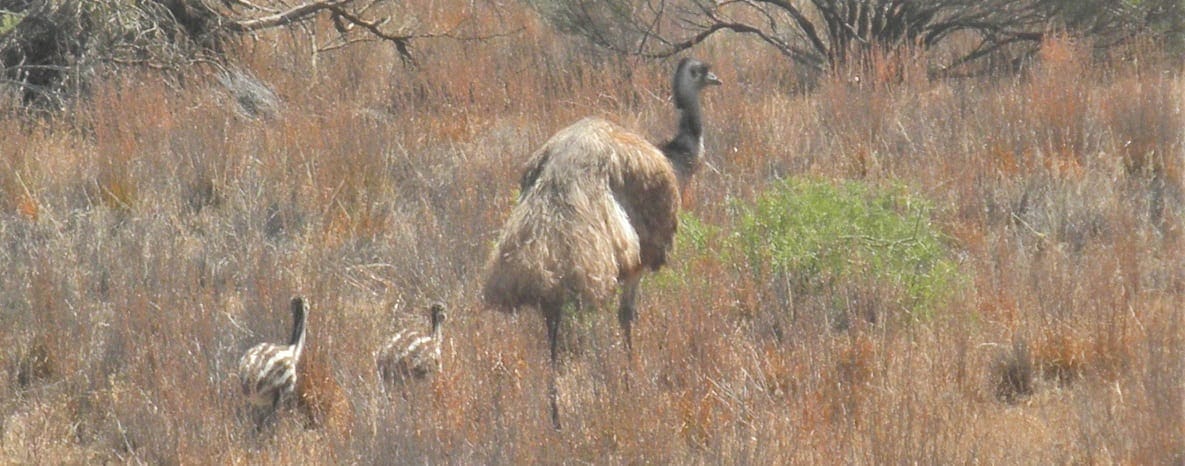
Yellow-footed rock wallaby
Flinders Ranges
As an Australian outback destination, we decided on the Flinders Ranges which start approximately 500ks north of Adelaide. The Flinders Ranges began emerging around 800 million years ago.
‘Humanity Seat Formation’ -evidence of undersea rock, Barraranna Gorge
A sea formed covering the area for about 300 million years. This deposited sediment over the area and in the Ediacaran Hills, some of the oldest fossil evidence of animal life was discovered by Reg Sprigg, geologist, oceanographer and conservationist.
Rocky crater of Wilpena Pound
Having read about the area’s vulnerable and protected ‘yellow-footed rock-wallabies’, my husband and I then fixed our sights on the destination of remote Arkaroola in the Northern Flinders Ranges.
Barraranna Gorge
Echo Camp
Kookaburra Creek Retreat
Leaving Adelaide, we drove through the wine growing regions of the Barossa and Clare Valleys before stopping to stay for an amazing few nights at ‘Kookaburra Creek Retreat’ near Melrose. Marketed as ‘A Unique Australian Bush Experience’, set in 80 acres of privately owned bushland in the Southern Flinders Ranges, it lived up to its promise. Our accommodation in the lovely stone cottage was truly restful. Fresh organic eggs and homemade bread were supplied for our breakfast. Check out the map Email: [email protected] Contact Melita: +61 4 39 618 378
Stone Hut Kookaburra Creek Retreat Melrose
Kookaburra Creek Retreat near Melrose
Exploring Kookaburra Creek Retreat near Melrose
Alligator Gorge
We explored the retreat’s beautiful land and nearby Mt Remarkable National Park. Here we walked through the jagged rock formations of ‘Alligator Gorge’ created over millions of years as Alligator Creek cut into the rock.
Exploring at Alligator Gorge
We saw big grey kangaroos, native birds and colourful wildflowers as we meandered slowly along so as not to miss the opportunity to enjoy the sights, sounds and smells of the Australian outback.
Kangaroo and wildflowers near Alligator gorge
Wildflowers in Alligator Gorge
Kangaroos at Alligator gorge
Driving to Arkaroola
Heading north again, we diagonally crossed to the western side of ‘Wilpena Pound’ marvelling at the colours on the rocky landscape and high ridges. We crossed through dry river beds and stands of eucalypt on this off-highway minor road, recommended by friends back home. We were not disappointed with the ‘wow factor’ as we encountered the outback, families of emus crossing the road, kangaroos, and sparse bush farmland.
40 photos from the writer. Select one to see it larger.
Below the Wilpena Pound rim as we diagonally crossed beneath
Stopping for lunch at the Prairie Hotel, Parachilna, we felt that the real outback was now firmly in our grasp. At Copley, we left the main road and drove through the expansive wilderness between the North and South Flinders Ranges.
Prairie Hotel Parachilna
We passed by the ‘Iga Warta’ where you can experience the local Adnyamathanha culture, people, and the land. Enjoy camping outdoors where you will be guided by a local Aboriginal who shares the stories of the land, paintings, bush medicine, the local fauna and flora and ‘bush tucker’ (local food). Email: [email protected] Phone: +61 8 86483737
Emu’s near Iga Warta on the drive to Arkaroola
First sightings
Nearing Arkaroola, in the late afternoon, with great delight we got our first sighting of the yellow-footed rock wallabies. They hopped along the roadsides and among the rocky red earth. Knowing they are shy and wary of human habitation, we drove onto the village and settled into our accommodation.
Rock wallaby near Arkaroola
The Sanctuary
The 610 sq kms (240 sq miles) of the Arkaroola Wilderness Sanctuary was established in 1968 by Reg Sprigg, along with his wife and family. In 1935, the land was fenced and later cleared of the overpopulation of donkeys, camels, foxes, feral cats and goats. The yellow-footed rock wallabies were able to re-establish their population due to this great conservation effort. A small variety of the marsupial kangaroo family, living in remote parts of South Australia, New South Wales and Queensland, they are distinguished by the irregular gold and dark rings on their tail and light yellow orange-brown legs which gives them their ‘yellow-footed’ name.
Barraranna Gorge yellow-footed rock wallaby, near Arkaroola, Northern Flinders Ranges
Their preferred habitat is rough rocky terrain; and on our walks, in gorges and around rock pools, they provided us with amazing opportunities to watch and photograph them as they hopped around the rock outcrops avoiding our gazes and camera lens.
Nooldoonooldoona Water hole with jagged rock sides
Tourist activities
Tour companies provide ridge top, waterhole tours to eco camp, Nooldoonooldoona, Arkaroola, Stubbs and Bararranna Gorge. Astronomical tours, along with mountain biking and scenic flights, also provide popular tourist highlights.
Wildlife spotting at twilight at Nooldoonooldoona waterhole
Amazing twilight colours and a yellow-footed rock wallaby at Nooldoonooldoona water hole
Nooldoonooldoona water hole
Whilst at Arkaroola, we enjoyed a self-drive off-road 4WD trip on the ‘Eco Camp backtrack’.
4WD road to Eco Camp
Here, wildlife, birds and amazing scenery delighted all of our senses as we visited the waterholes tucked into the gorges.
Weather-beaten rock formations at Eco Camp
Shingleback lizard at Arkaroola Waterhole
Kangaroo at Arkaroola Waterhole
Echo Camp glamping with a handbag in the outback
Mining and exploitation of the land
Coming out on the Eastern Ranges, we made a side trip to the Paralana uranium hot springs at Vadaardlanha.
The road to Paralana Uranium hot springs
Paralana hot springs sign
Testing the uranium spring at Paralana
Here, we wandered up the gorge enjoying the utter remoteness of this historical site, encountering wildlife, ochre rock formations and incredible arid beauty. In the past, the whole area was a veritable mining camp in a geological wonderland where copper (1910), uranium (WWII), ore minerals, gold and precious minerals such as sapphire, ruby, amethyst and Jasper, to name a few, have been found.
Paralana area
Hot days, starry nights
Temperatures range from 26/27C during June/July and 44/45C during the summer; meaning you may just wish to lie by the pool! In addition to the hot days, Arkaroola is famous for its clear night skies and amazing ‘seeing conditions’ which have facilitated the building of three astronomical observatories. Email: [email protected] Phone: +64 8 8648 4848
Sunset on the rocks at Arkaroola
Wilpena Pound
Leaving Arkaroola, for our journey back to Adelaide, we took the long straight road to Wilpena Pound.
The long straight drive to Wilpena Pound
Along the way we admired the emus at Blinman (main photo), marvelled at the height of the flood measuring sticks, and observed the ancient lizards.
Flood water measuring stick on the drive to Wilpena Pound
Shingleback lizard Flinders Ranges
Observation point on the way to Wilpena Pound – map on the stone slab and the real thing beyond
Bearded dragon on the drive to Wilpena
At Wilpena Pound, we surveyed the area in awe, from the dizzying heights of the steep rocky trail to Mt Ohlssen Bagge.
Track to Ohlssen Bagge; Wilpena Pound
On Ohlseen Bagge, Wilpena Pound
Across the south end of Wilpena Pound from Ohlssen Bagge and the hills beyond
Lizard on Ohlssen Bagge Wilpena Pound
We ventured into the amphitheatre of the Pound itself, taking a walk to an observation point and marvelling at the history of this almost 80sq km bowl.
Walking into Wilpena Pound
Observation point in Wilpena Pound
Back to Adelaide
Driving back to Adelaide via Port Augusta and the Spencer Gulf, we reminisced on our adventure. We packed a lot into a short time; however, we barely scratched the surface. There is a raft of places waiting to be explored as the Australian outback beckons us to return.

TeresaGlobalTravels Teresa Lynch
As a young adult, I wanted to travel and write - I now get to do both. In the interim, I became a registered nurse and gained a Masters in Health Science and bought up a family of 4 children - who live scattered around the world, providing me with destinations and stories. I also practice and teach Accunect, a holistic healing practice based on Traditional Chinese Medicine (TCM). I practice meditation and enjoy my collective and extended family of Oneness and Buddhist friends. My husband loves to cook and we explore the food of the world, particularly Mediterranean cuisine. This myriad of experiences feeds and inspires my writing. We are always researching and planning the next trip.